
Virtual Show Photo Entry Guidelines
Please note: any photos entered that are not taken on an acceptable surface or from the correct angle WILL NOT be accepted.
General Photo Requirements
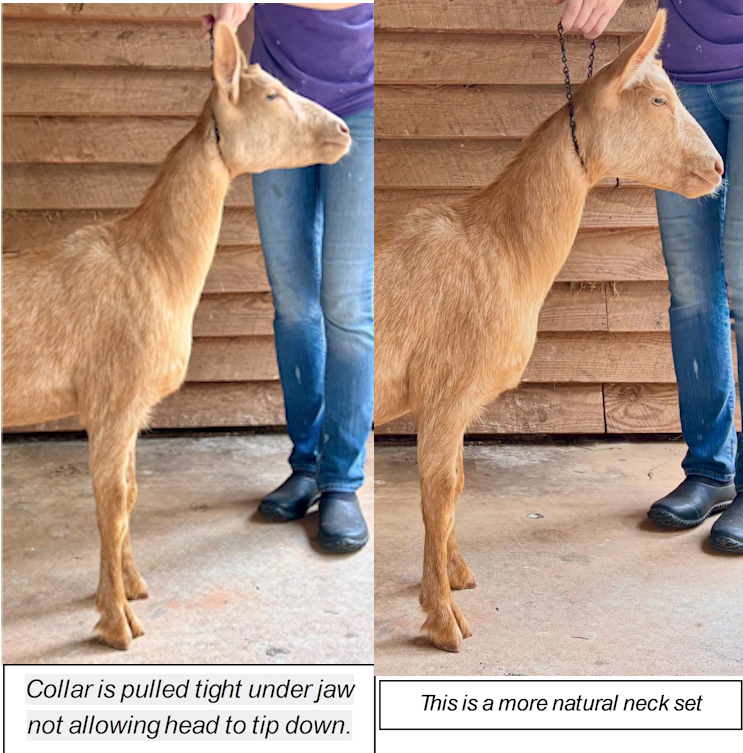
All photos should be taken on a flat, solid surface with a clean, uncluttered background. Good surfaces include wood, concrete, and blacktop. Avoid grass, deep straw, bedding, or uneven ground, since these can hide feet and legs and make the animal harder to evaluate. A plain sheet or simple backdrop can help keep the judge’s attention on the goat.
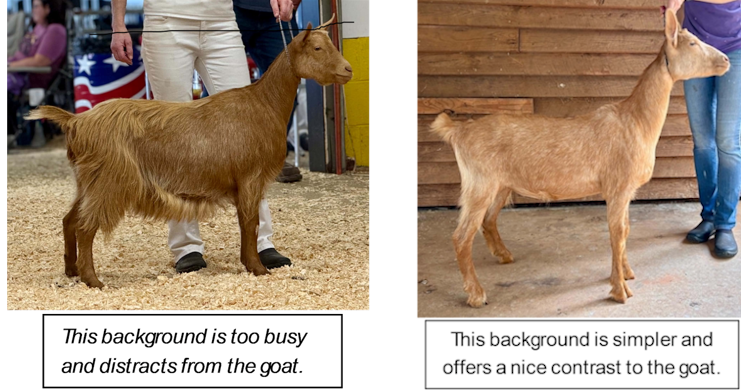
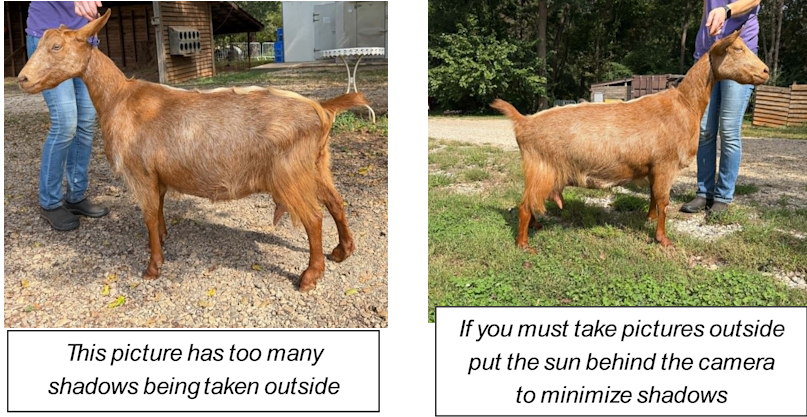
Lighting is also very important. Photos taken in natural, even light are usually best, especially on overcast days. Harsh sunlight can create shadows that hide important details. For side, front, and rear views, the camera should be positioned at approximately the goat’s level, usually around the middle of the body.
Clipping long skirts to the side using hair clips helps give the goat a neat, clean appearance and allows the judge to see conformation more clearly. A dairy clip may also be used to trim the udder, feet, legs, and any long hair. For does in milk, the udder should be trimmed or shaved so its shape can be seen clearly. The photo should be taken just before milking so the udder is full, but do not over-udder your doe! Too much milk can damage the udder!
A show collar can help you control the goat and also give the animal a cleaner look. Bulky pasture collars should be avoided. Handlers should wear neutral colors whenever possible so they do not distract from the goat.
Side Photos
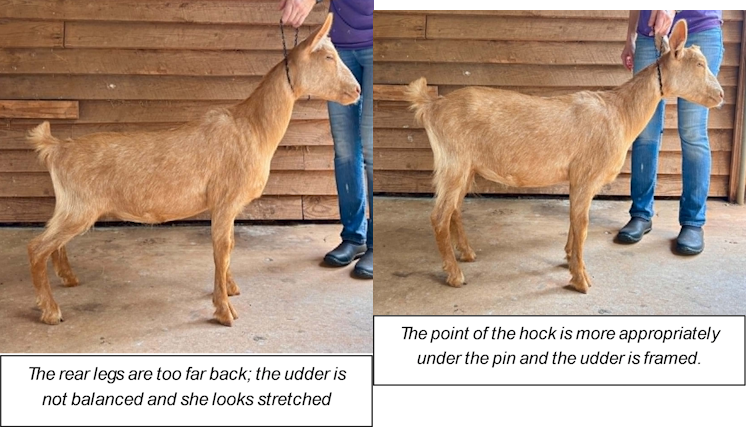
Side photos should show the goat standing naturally but correctly. The head should be up and forward, and the rear feet should be placed directly below the pin bones. The front legs should be straight under the body, and the back legs should be plumb from hock to hoof, with the thigh curving upward to the hip. Do not stretch the goat out like a racehorse or let the animal look hunched up.
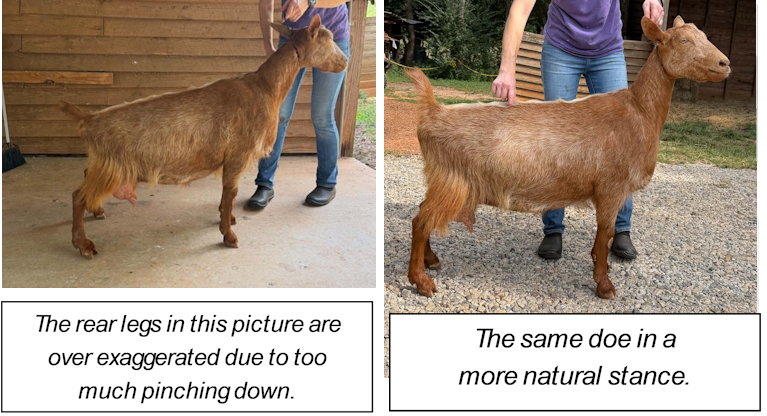
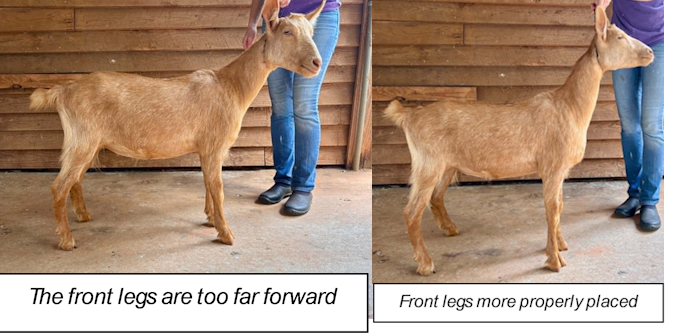
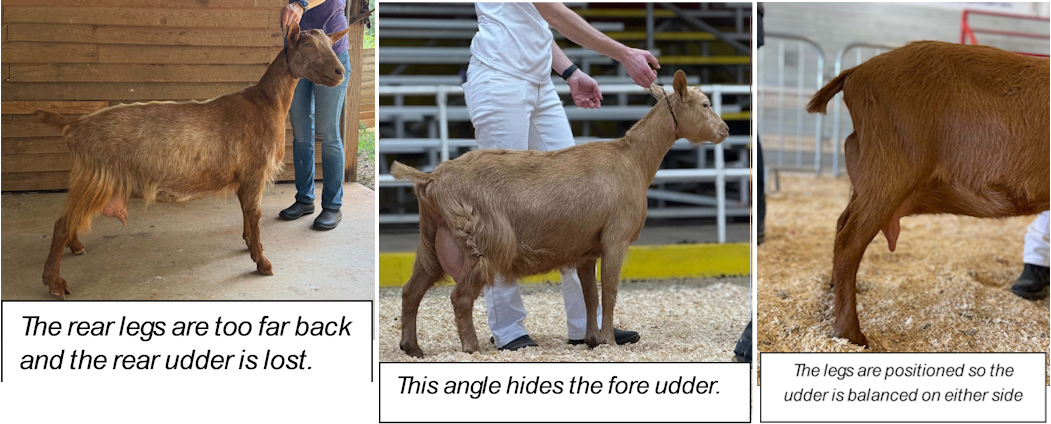
For milking does, the rear legs should be positioned so the udder is framed correctly. Ideally, one-third of the udder should be in front of the leg, one-third hidden by the leg, and one-third behind the leg. This helps the judge see the udder clearly while still keeping the pose natural. Proper foot placement is also important for showing a smooth topline. Gentle pressure behind the hips can help level the goat if needed, but no amount of posing can completely correct poor conformation.
Rear and Udder Photos
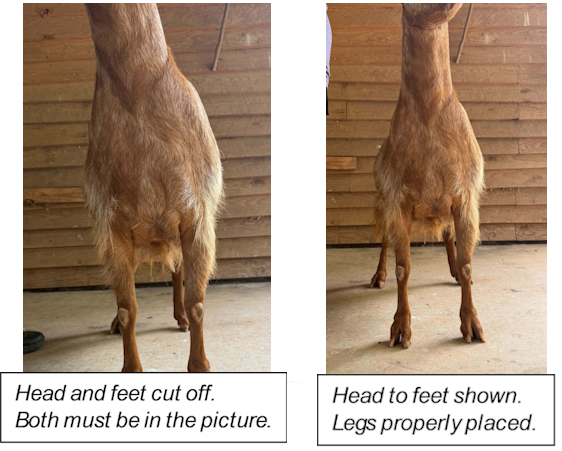
Rear photos should show the goat from the tail or top of the hips down to the feet. The escutcheon should be clearly visible and should appear high and wide. This photo should be taken straight on and at the goat’s level. The rear legs and feet should be visible, and the hips and feet should not be cropped out of the picture.
For milkers, the rear view should show the udder clearly. When taking an udder-only photo, the vulva and hocks should still be visible, since these help the judge evaluate rear udder height and depth. Excess hair should be trimmed or clipped back out of the way, and the photo should be taken right before milking so the udder is full.
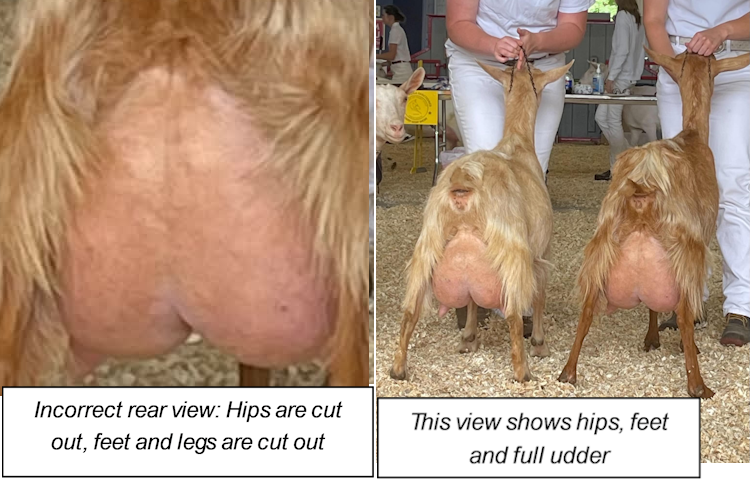
To help the goat place the rear legs correctly, place your hand on the hips and rock the goat gently from side to side. This usually helps the goat settle into a natural and correct position.
Front Photos
Front photos should show the width of the chest, the front legs, and the feet. The legs should be straight and square under the body. Do not let the goat stand with the feet splayed out or too close together. The picture should be taken at the goat’s level so the animal appears balanced and proportional.
The front view is especially useful for showing body capacity and correctness of the feet and legs. Care must be taken to avoid an angle that makes the goat look awkward or makes the head appear too large for the body.
Top Photos
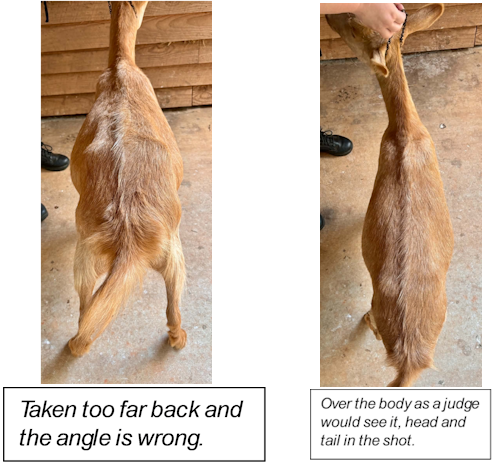
Top photos should show the goat from head to rear hocks, taken from above and behind as if the judge were standing over the goat. The body should be straight, and the legs should be placed squarely. This view helps show body capacity, spring of rib, width, and overall balance.
Photos taken too far back will not be accepted, since the judge must be able to see the full top line and rump clearly.
Fore Udder View
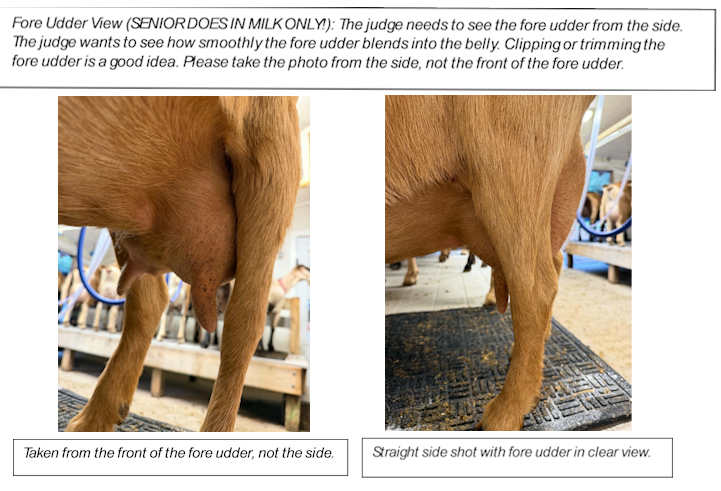
The fore udder view should be taken from the side, not the front. The purpose of this photo is to show how smoothly the fore udder blends into the belly. Clipping hair to the side or shaving the area helps make the attachment easier to see. This is especially important for senior does in milk.
Final Photo Check
Before submitting a photo, review it carefully. Ask yourself whether the background is clean, the feet and legs are visible, the angle is correct, and the lighting is even. The goat should look natural, balanced, and easy to evaluate. If the photo does not clearly show the animal, it should be retaken.
Thank you to Jessica Bell and her Split Creek Guernseys for the photos!